


(Open-access) Accessibility: Review and Repair Recommendations for Northern Bridge Consortium
Updated: Jan 5
Two-Thirds of PhD Students Do not Use the Doctoral Training Partnership Website. The Real Problems Run Deeper.
What is not working in Northern Bridge Consortium's (NBC) current approach to access? When we asked this question to understand how PhD students use NBC documentation at the 2024 NBC Summer School at Queen's University Belfast, their responses revealed something unexpected: the barriers extended far beyond NBC’s documentation and website.
Students highlighted challenges ranging from navigating late-life diagnoses to financial constraints, bureaucratic confusion, and difficulties articulating their access adjustments.

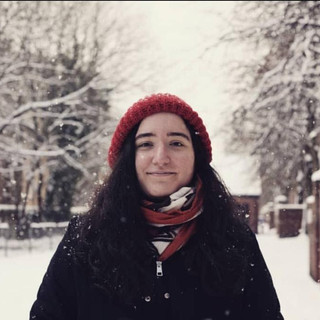
Newcastle University, photo by Betül Gaye Dinç.
This was the catalyst for Accessibility: Review and Repair, a sub-project of EDI Action Award Research Fellowships, which I conducted with Rachel Boyd at Newcastle University. Our aim was to provide accessibility recommendations to Northern Bridge Consortium (NBC), a doctoral training partnership among seven universities in North East England and Northern Ireland, funded by the Arts and Humanities Research Council (AHRC).
Initially, our brief was to provide recommendations to improve NBC’s public documentation. But the students’ feedback pushed us to expand our scope: from documentation and website improvements to systemic recommendations addressing bureaucratic processes, support systems, and institutional practices across doctoral training.
Rethinking Access: Beyond Individual Accommodations
Before unpacking our findings, I should pause here to explain our approach. We drew insights from disability studies scholars Tanya Titchkosky and Margaret Price, who argue that access is not simply about individual accommodations rather it is about redesigning systems and environments.

Accessibility Activity Diagram, created by Betül Gaye Dinç and Rachel Boyd, 2025.
We found that the traditional model, where students must repeatedly request and justify their needs, creates what Price calls an "accommodation loop." This cycle places enormous emotional labour on students while often failing to produce meaningful change.
We revised this model as Accessibility Activity Diagram with Yrjö Engeström’s “Activity Theory” which layouts how systems operate with multiple actors collectively. The Accessibility Activity Diagram shows how time constraints, emotional labour, and institutional capacity limits create insurmountable barriers for students seeking support. This cycle of burden impacts both students and institutions, sometimes leading to systemic burnout and students considering to leave their programmes.
Key insight from the Report: Access accommodations should not be limited to students who identify as disabled. Part-time students, those with caring responsibilities, international students navigating visa requirements, and mature researchers all require flexible, responsive support systems.
What PhD Students Told Us: The Barriers Are Intersectional
Through an anonymous survey of 54 participant and semi-structured interviews with 9 current students, we found that access challenges intersect in complex ways. Disabled students, international students, mature researchers, and those with caring responsibilities often face multiple, overlapping barriers simultaneously.
One student explained their financial stress:
"Make stipends each year clear, sending them to students. I have to ask what my stipend is each year, which makes it tricky to budget and adds a lot of stress."
Another highlighted inadequate parental leave policies:
"There is essentially no paid paternal leave... While there is the option for a year unpaid, it is literally impossible to support a young family with unpaid leave."
The most frequently mentioned challenges included:
Difficulty obtaining information – Navigating websites, documents, and administrative processes proved challenging for the majority
Bureaucratic obstacles – Complex funding applications and unclear procedures created significant barriers
Depersonalised support – Students felt caught between university and NBC administrations, unsure whom to contact
Time-related pressures – Inflexible schedules and short notice for events compounded existing difficulties
Wellbeing concerns – Stress, isolation, and mental health challenges pervaded responses
The "All or Nothing" Phenomenon
Perhaps our most striking finding: Students either received satisfactory support or faced such significant barriers that their entire PhD experience was disrupted. There was little middle ground.
Among disabled students, support experiences ranged from "entirely supportive and helpful" to requiring students to "run around in circles" between institutions with no clear resolution.
Our Recommendations: Four Practical Approaches
We organised our recommendations into four formats to maximize usability:
List of Actions
Concrete improvements including: website navigation enhancements, establishing office hours for personalized support, expanding grant eligibility, clearer placement guidance, and building peer networks to combat isolation.
Scenario-Based Planning
Rather than prescribing top-down solutions, we created scenarios that foster dialogue between students and administrators. This participatory method allows both groups to collaboratively identify problems and develop responsive strategies.
Training Resources
A curated list of organizations offering training on ability, age, ethnicity, gender, mental health, and web accessibility, tailored for academic work environments.
Access Rider Template
A practical template for normalizing conversations about access adjustments between institutions and students, borrowed from practices used by disabled artists and freelancers.
What Happens Next?
Our research reinforces that accessibility in doctoral education requires ongoing commitment and adaptation. Policies and guidelines, no matter how well-intentioned, cannot anticipate every individual’s circumstances. What PhD students demand are flexible frameworks that empower administrators to make responsive decisions and normalize asking for support.
The project also highlighted areas requiring further investigation, particularly around why certain groups, including students from minority ethnic backgrounds and male students, were less likely to disclose access adjustments or request accommodations.
Impact: EDI Fellowship reports were presented at the 2025 NBC Summer School in Durham University. The directors explained that these recommendations created the basis for a student advocacy role to implement PhD students' demands in practice.
Thus, Accessibility: Review and Repair began contributing to actualising one of our key findings: By implementing responsive support systems and fostering dialogue between students and administrators, doctoral training partnerships can cultivate more equitable environments designed around the lived experiences of postgraduate students.
Read the full report: Accessibility: Review and Repair (March 2025, embedded link)
For other DTPs: If your doctoral training partnership is interested in adopting similar approaches or discussing these findings, please get in touch with the researchers:
Betül Gaye Dinç (betul.dinc@northumbria.ac.uk)
Rachel Boyd (rachel.boyd@northumbria.ac.uk)
References
Engeström, Y. Learning by Expanding: An Activity-Theoretical Approach to Developmental Research. Cambridge University Press, 2015.
Price, Margaret. Crip Spacetime: Access, Failure, and Accountability in Academic Life. Durham, NC: Duke University Press, 2024.
Titchkosky, Tanya. The Question of Access: Disability, Space, Meaning. Toronto: University of Toronto Press, 2011.
Comments